Base film
Polyester and polycarbonate offer different forming, flexing, appearance and environmental behaviour.
The visible face of your equipment
A graphic overlay is the printed and die-cut surface that communicates functions, protects the interface and carries the product's visual identity. Material, hard coat, texture, colour, windows, embossing, adhesive and environmental exposure determine the final construction.
Engineering variables
Polyester and polycarbonate offer different forming, flexing, appearance and environmental behaviour.
Gloss, matte, anti-glare and selective textures control appearance and touch.
Clear, tinted, dead-front and diffused regions are coordinated with the display and lighting.
The backing surface, cut-outs and tolerances must match the equipment drawing.
Decision matrix
A graphic overlay quotation depends on more than artwork and an outline. A comparable RFQ identifies the controlled visual reference, film and surface, window function, mating substrate, adhesive conditions and the physical sample that authorizes production.
| Decision factor | OEM input | Engineering review output |
|---|---|---|
| Artwork and revision | Provide editable vector artwork, fonts or outlined text, language versions, dimensions, cut-outs, datum scheme, drawing revision and the owner who can approve graphic changes. | Return a controlled artwork proof, unresolved data conflicts and the proposed production file identity. A screen image or exported PDF alone is not treated as colour or dimensional approval. |
| Colour and viewing | Name each colour reference and whether approval uses a physical master, measured target or both; define lighting, background, viewing orientation and any critical adjacent-colour relationship. | Return the proposed matching and inspection basis, including which differences require a new sample. Colour names and monitor previews are not universal acceptance criteria. |
| Film, print and surface | State the preferred film family, thickness envelope if controlled, print method, gloss or texture zones, cleaning exposure, abrasion points, forming or flexing and any supplier-document requirement. | Return the proposed film, print and surface construction with supplier evidence still required before release. A generic polyester or polycarbonate label does not establish grade, finish or durability. |
| Windows and optical interface | Define display and indicator locations, clear, tinted, diffused or dead-front intent, active viewing area, border, optical gap, lighting state and the equipment behind each window. | Return a coordinated window, print and stack definition plus the representative powered sample needed for visual approval. An unpowered overlay sample cannot approve the complete illuminated interface. |
| Adhesive and mating surface | Identify the actual mating material, coating, texture, flatness, cut-outs, edge support, cleaning method, assembly conditions and whether removal or service replacement is expected. | Return the proposed adhesive zones, surface-preparation questions and project-specific bond evaluation. A supplier peel value on a standard panel is not a universal equipment bond prediction. |
| Sample, release and change control | Define the physical approval sample, colour and dimensional checks, appearance limits, packaging and protective handling, approval owner, retained reference and notification rules for artwork, ink, film, adhesive or process changes. | Return one controlled release basis tying artwork, material sources, sample, inspection method and revision together. Approval applies only to the identified construction and viewing or test conditions. |
ISO 12647-5, ISO 3668 and ASTM D3330/D3330M provide limited context for screen-print process control, controlled visual colour comparison and pressure-sensitive tape peel measurement. The RFQ must still name the applicable method, specimen, conditions and acceptance criteria; these references do not select or qualify an HYR overlay construction by themselves.
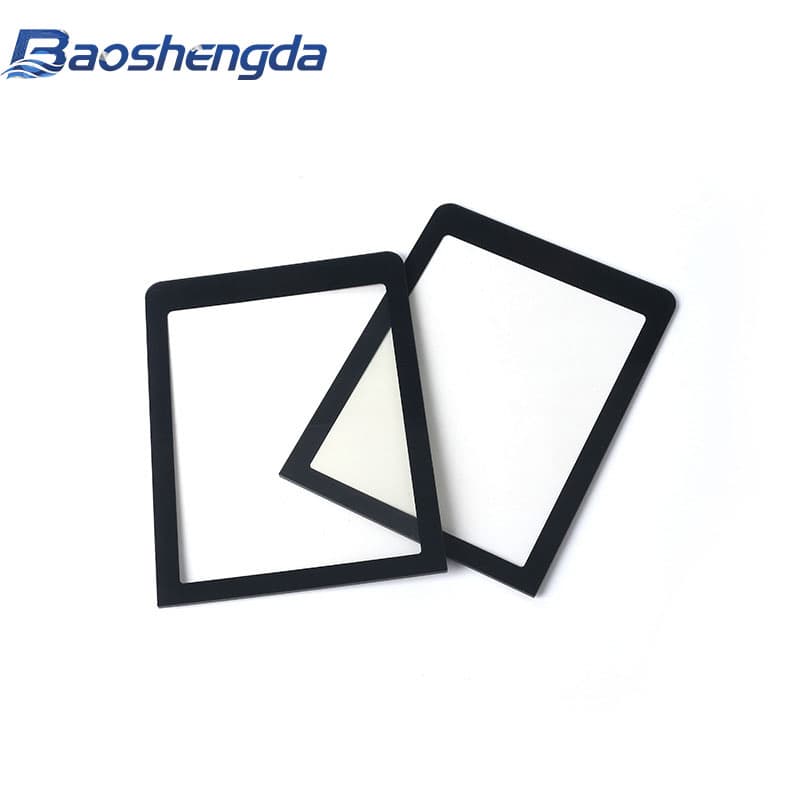
Parent-company product reference
Real product resource provided by Shenzhen Baoshengda Technology Co., Ltd., the parent company of HYR FLEX.
Representative product resource · project construction is confirmed from the approved drawing.Before the RFQ
Start with the evidence you have now. Open items stay visible for engineering follow-up instead of becoming silent quotation assumptions.
No. Digital files can control artwork content and identify colour intent, but production approval needs the agreed physical or measured reference, substrate and print construction, viewing light, background and comparison conditions. Record which sample and revision control the result, especially for adjacent colours, windows, textures or special-effect appearances.
No. A peel result belongs to the named tape, backing, specimen surface, preparation, test method and conditions. Review the actual equipment material, coating, texture, flatness, cut-outs, edge support, cleaning and assembly process, then evaluate the proposed construction on a representative mating surface against project acceptance criteria.
Approve the controlled artwork and dimensions, colours and surface zones under the agreed viewing conditions, cut-outs and windows with the equipment behind them, embossing or key alignment, edge quality, handling and the adhesive interface on a representative substrate. Record the artwork, drawing, material construction, sample and approval conditions used for release.
A useful fit when
Limits to resolve
Prepare the RFQ
You can submit what is available now. Unknown items remain visible for human follow-up rather than being guessed.
Vector artwork and colour references
Outline, cut-outs and window dimensions
Surface finish and cleaning exposure
Adhesive surface and expected quantity
Evidence boundary
Colours, materials and finishes are approved through controlled artwork and samples; certification remains with the actual material or manufacturing document holder.
Technical reference basis
These publisher resources support the decision framework. They do not prove that HYR uses a named grade, holds a listed certification or has approved a project construction.
Primary standards-body scope for four-colour process screen printing used for display, signage and graphics; it is not a universal spot-colour, material or finished-overlay acceptance specification.
Primary standards-body example of controlled lighting and viewing conditions for visual comparison of paint films; it does not become an overlay colour method unless the parties explicitly adopt an applicable procedure.
Primary standards-body scope and limitations for pressure-sensitive tape peel measurements; the method does not provide universal design information or compare unlike adhesive constructions on every equipment surface.