Requirement review
Inputs, unknowns and responsibilities are recorded before a sample is committed.
Controlled transition between project stages
A prototype proves selected construction and interface assumptions; it is not automatically the production definition. HYR FLEX keeps drawing revisions, customer feedback, material decisions and approval status visible as the project moves toward repeat orders.
Engineering variables
Inputs, unknowns and responsibilities are recorded before a sample is committed.
The first build is used to check fit, feel, graphics, circuit and assembly.
Customer feedback becomes a controlled drawing or specification change.
Approved files, inspection points and packaging define the repeatable supply item.
Decision matrix
Each gate starts from named evidence and ends with a recorded decision. A prototype represents its exact drawing, materials, build conditions and intended checks; it does not automatically approve another revision or the finished equipment. Price, tooling and timing remain conditional until the relevant gate inputs are confirmed.
| Decision factor | Entry evidence | Gate output |
|---|---|---|
| Review basis | Identify the current drawing and artwork revisions, circuit or pinout, enclosure constraints, use environment, project stage, sample purpose, estimated quantity basis and every known assumption or unresolved decision. | Record the review basis, open-item owner and proposed construction direction. The gate stays open when missing or conflicting information would change fit, function, material selection, tooling or quotation scope. |
| Prototype definition | Approve the sample drawing package, artwork, circuit, tail and connector, construction assumptions, sample quantity and purpose, plus the visual, dimensional, electrical and installed checks the sample is intended to support. | Release a prototype-specific definition and check plan. This authorizes only the named sample build and does not silently become a repeat-production drawing, specification or finished-equipment approval. |
| Installed sample evaluation | Evaluate the identified sample revision in the intended enclosure and controller context. Record fit, appearance, legends, windows, key feel, circuit function, connector alignment, mounting, sealing interfaces and any customer-specific checks. | Return an approval, rejection or conditional decision tied to the tested specimen and method. System safety, EMC, environmental qualification and finished-equipment validation remain with the OEM unless separately assigned and evidenced. |
| Revision decision | List each requested change and its reason. Identify affected dimensions, artwork, circuit, connector, materials, tooling, inspection, packaging and previously completed checks. | Issue a new controlled revision or a documented no-change disposition, identify superseded files and define which sample or verification activities must be repeated before the next gate. |
| Production-intent release | Confirm the approved drawing and artwork, BOM or controlled construction, tooling references, critical inspection points, functional test, packaging, labelling, traceability, commercial scope and named approval owners. | Create the production-intent supply definition and release record. Repeat production can follow only the approved scope; unresolved requirements, unapproved substitutions or incomplete customer decisions remain outside the release. |
| Repeat-order control | Reference the released part and revision on the order, confirm quantity and delivery requirements, review material or process changes, and identify any interval, condition or customer request that requires renewed approval. | Match the repeat order to the released definition, record accepted changes and preserve traceability to the applicable inspection evidence. A change that affects approved characteristics returns to the appropriate earlier gate. |
The ASME, ISO and IPC references below provide engineering-document revision, quality-system and flexible-board qualification context only. They do not prove that HYR, a customer product or a proposed construction conforms to those standards, is certified, has passed system validation or is approved for repeat production.
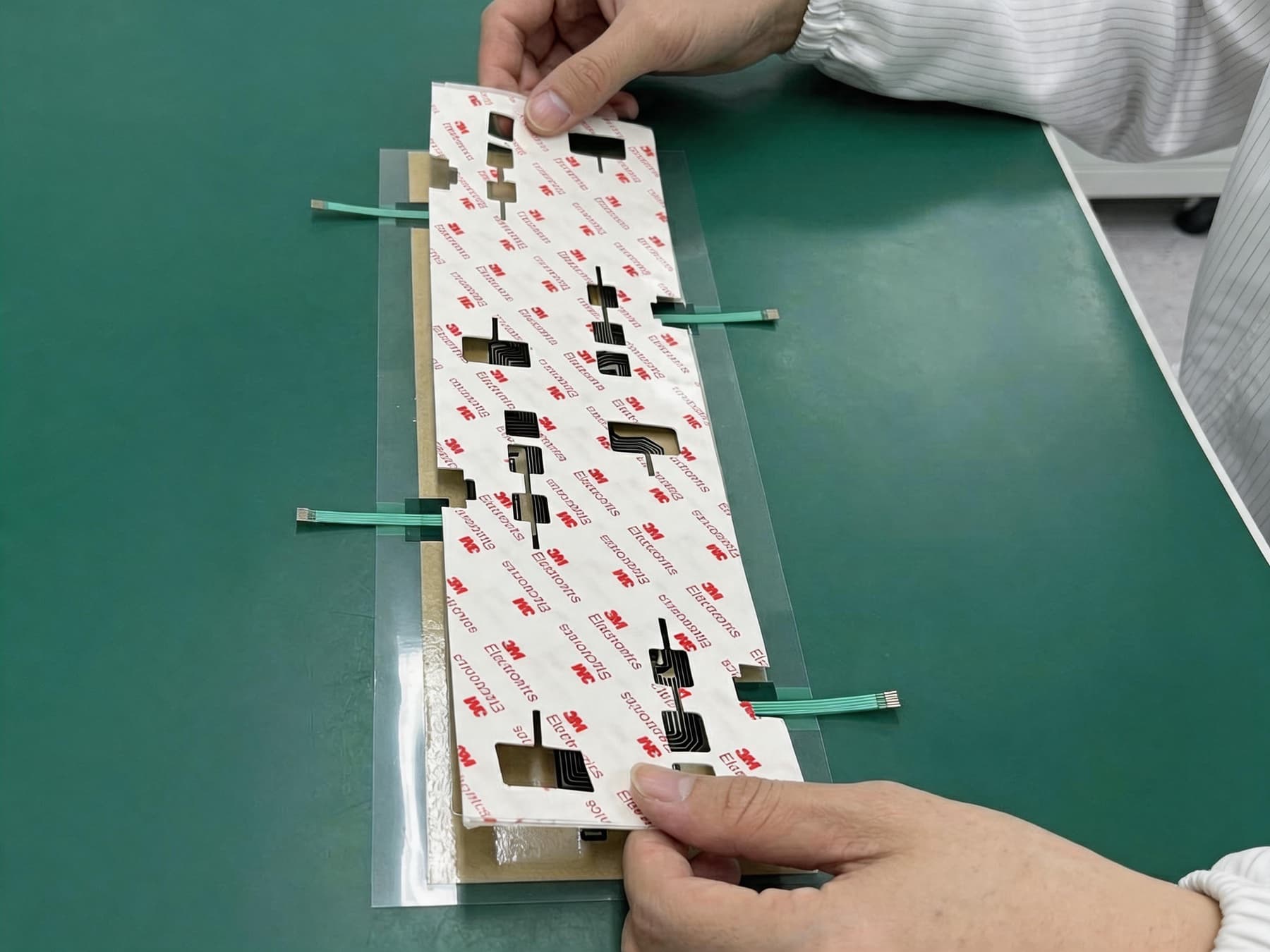
Real product evidence
Real manufacturing resource provided by Shenzhen Baoshengda Technology Co., Ltd., the parent company of HYR FLEX.
Representative product resource · project construction is confirmed from the approved drawing.Before the RFQ
Start with the evidence you have now. Open items stay visible for engineering follow-up instead of becoming silent quotation assumptions.
There is no truthful universal number. The sample quantity follows the decisions and tests it must support, such as enclosure fit, appearance, key feel, electrical function, assembly trials or customer evaluation. The purpose and acceptance owner should be named before the sample is quoted.
No. Approval must identify the specimen and revision, the checks performed and any conditions. Repeat production requires a production-intent drawing and construction, inspection basis, packaging and commercial scope that match the approved decisions.
The change is recorded against the released revision, its effect on fit, artwork, circuit, materials, tooling, inspection and prior evidence is reviewed, and the affected checks are repeated before the next release decision.
A useful fit when
Limits to resolve
Prepare the RFQ
You can submit what is available now. Unknown items remain visible for human follow-up rather than being guessed.
Current project stage
Sample quantity and purpose
Acceptance owners and criteria
Expected production scenario
Evidence boundary
Stage, approval and revision are recorded separately; no sample, order or delivery claim is created without evidence.
Technical reference basis
These publisher resources support the decision framework. They do not prove that HYR uses a named grade, holds a listed certification or has approved a project construction.
Official engineering-document revision context for identifying and recording changes; not evidence that an HYR or customer drawing system conforms to ASME Y14.35.
Official quality-management-system context for controlled processes and documented information; not evidence that HYR is certified to ISO 9001 or that a proposed product is approved.
Official revision-status context for IPC-6013 when a project uses a qualifying flexible or rigid-flexible printed-board construction; not a claim that every membrane-switch circuit is covered or compliant.