Metal dome
A separate dome provides a defined snap response and can also close the circuit.
Positive key feedback
Tactile membrane switches add a controlled feedback element beneath each key, commonly a metal dome or a formed overlay feature. The right choice depends on key diameter, operating force, spacer geometry, overlay feel and the enclosure support beneath the switch.
Engineering variables
A separate dome provides a defined snap response and can also close the circuit.
The overlay is formed for lighter integrated feedback where the application supports it.
Pillow, rim or custom embossing changes key location, feel and visual definition.
The backing surface and spacer stack influence dome travel and long-term consistency.
Decision matrix
A dome or formed overlay does not define the finished key by itself. Review the feedback element, actuator, retention, air path, circuit, overlay and enclosure support as one mounted stack before approving feel.
| Decision factor | OEM input | Mounted-sample evidence |
|---|---|---|
| Feedback architecture | State the user task, preferred physical response, any approved reference sample and whether a metal dome, formed overlay or another reviewed feedback element is being considered. | Return the proposed feedback architecture, its supply boundary and every unresolved assumption. The project does not inherit feel or performance from a product-family name. |
| Key and actuator geometry | Provide key centres, active areas, embossing intent, any hard-key or elastomer actuator, loading direction, available travel and the support beneath each key. | Check actuation alignment, contact location, off-centre loading and the mechanical interface on the actual enclosure geometry. |
| Circuit and retention | Identify the circuit platform, contact-pad layout, dome orientation and the proposed pocket, retainer or adhesive method that keeps each feedback element located. | Confirm contact closure, positional control and the controlled stack used by the sample; a loose component specification does not approve the assembled key. |
| Venting and sealing | Show the required environmental boundary and the controlled route for air displaced by the moving key area, including any path through the spacer, overlay side or equipment structure. | Verify that the key can move and recover while the intended protected boundary remains defined. Sealed construction is not assumed to mean an unvented switch pocket. |
| Overlay and mounted support | Define overlay film and forming intent, graphics, surface finish, adhesive zones, backing flatness, enclosure stiffness and any curved or unsupported region. | Review feel, sound, appearance and recovery on the mounted stack rather than approving the overlay or dome as an isolated part. |
| Approval evidence | Name the sample revision, production-representative enclosure, intended users or gloves, operating conditions and the acceptance method for feel, sound and electrical function. | Record the accepted specimen, construction and test conditions. Approval applies only to that controlled configuration and its stated acceptance boundary. |
The primary supplier references below explain component and film functions only. They do not select a dome, spacer, overlay grade or force for HYR, and no supplier value guarantees the feel of a finished mounted interface.
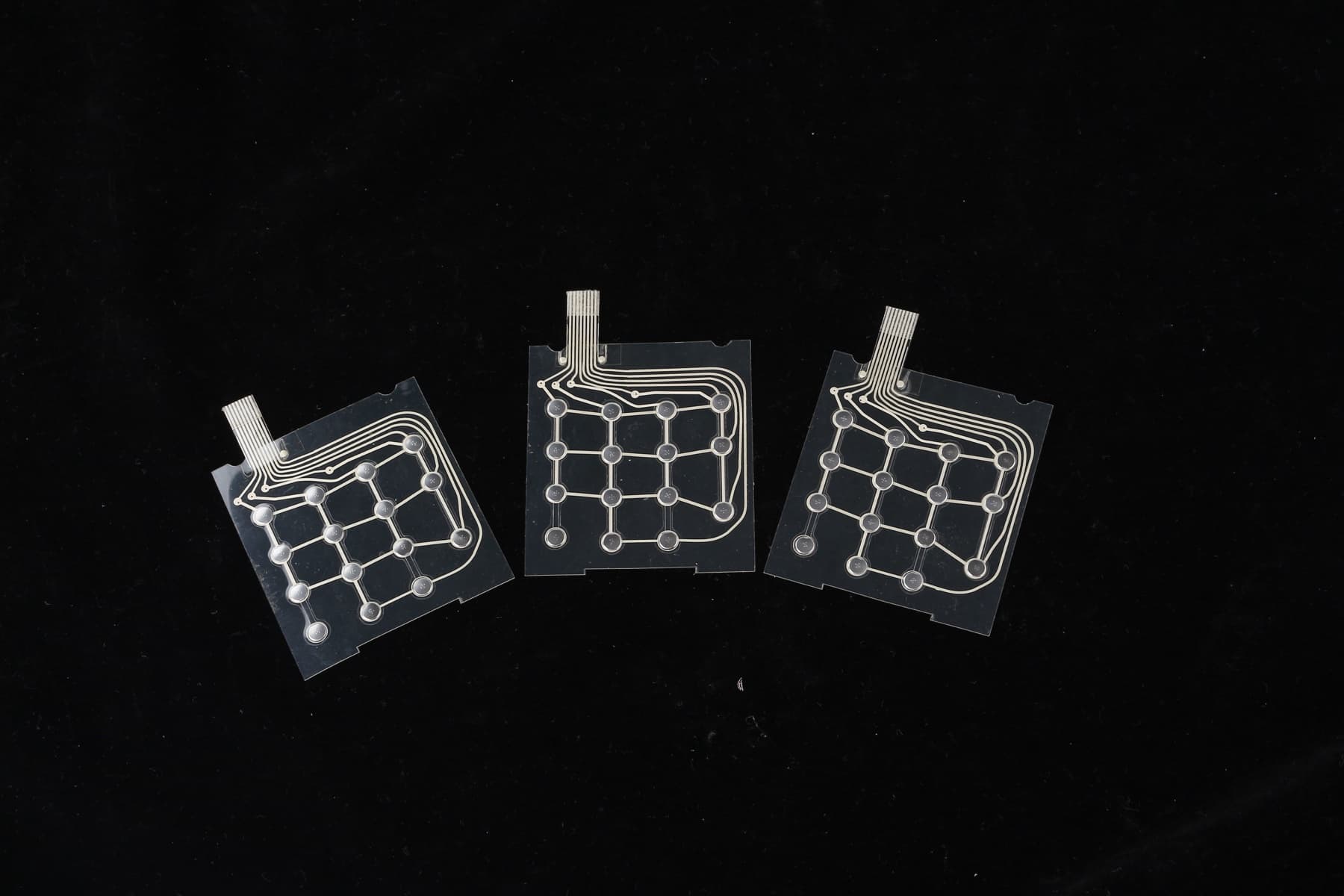
Real product evidence
Real product resource provided by Shenzhen Baoshengda Technology Co., Ltd., the parent company of HYR FLEX.
Representative product resource · project construction is confirmed from the approved drawing.Before the RFQ
Start with the evidence you have now. Open items stay visible for engineering follow-up instead of becoming silent quotation assumptions.
No. Dome geometry, actuator contact, overlay forming, retention, spacer, venting, circuit support and enclosure stiffness can all change the mounted response. Approve feel against a controlled sample and its stated test conditions.
No. The moving key area may need a controlled air path so it can actuate and recover. The path is designed inside the intended assembly boundary and then checked with the actual sealing construction and exposure method.
Use the production-representative enclosure to confirm key location, actuation alignment, feel, sound, electrical closure, retention, air path, overlay recovery and support. Record the sample and drawing revisions before repeat production decisions.
A useful fit when
Limits to resolve
Prepare the RFQ
You can submit what is available now. Unknown items remain visible for human follow-up rather than being guessed.
Key size and centre positions
Preferred force or reference sample
Overlay thickness and surface finish
Backing surface and operating environment
Evidence boundary
Feedback is evaluated on a project sample. Published claims are limited to the construction actually reviewed and validated.
Technical reference basis
These publisher resources support the decision framework. They do not prove that HYR uses a named grade, holds a listed certification or has approved a project construction.
Primary dome-supplier context for the overlay, adhesive, spacer or retainer, venting, circuit and metal-dome interfaces; it does not select an HYR dome or establish project performance.
Primary supplier context for circuit-layer assembly, switch-spacer and metal-dome-placement functions; the named material is not selected or approved for an HYR project by this reference.
Primary supplier context showing that specified polyester film ranges may support embossing for switch interfaces; it is not generic film evidence or an HYR material selection.