01
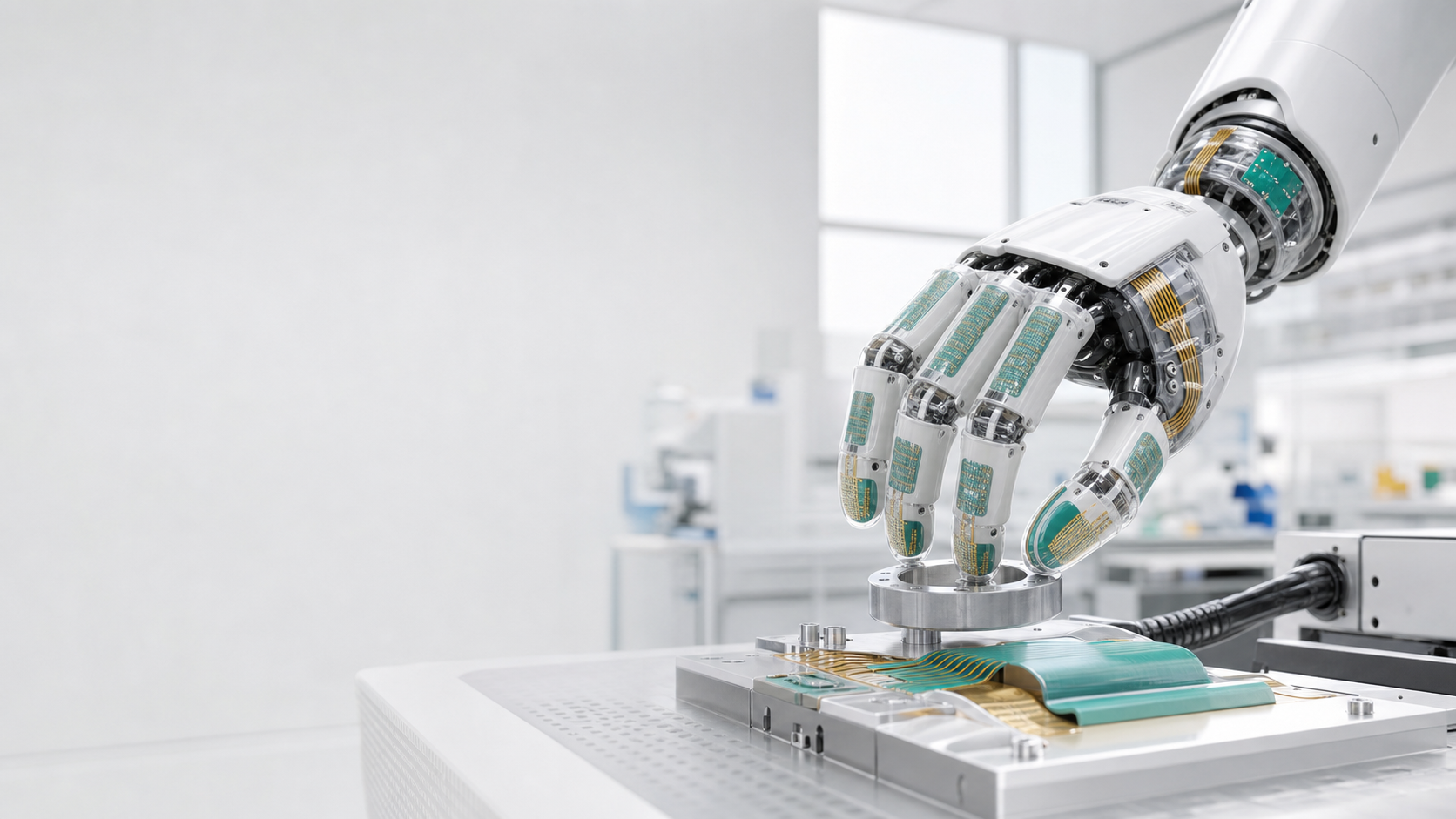
Contact sensing for robot fingers, grippers, palms and curved surfaces.
- Contact area
- Force range
- Spatial resolution
- Response and lifetime
APPLICATION FIRST
Start with the application problem. We turn an early idea into an assessable sensing, interaction or thermal requirement, then hand it to people for technical and commercial confirmation.
You do not need to understand sensors first
Tell us the equipment, user, action and problem. AI will identify the missing conditions before a person reviews the project.APPLICATION DIRECTIONS
Customers do not need to choose a sensor first. Describe the application, available space, force, temperature, lifetime and project stage; our team will then assess the product or combination.
Contact sensing for robot fingers, grippers, palms and curved surfaces.
Pressure, motion and support sensing for rehabilitation and medical equipment.
Posture, sleeping position, bed-exit and pressure-distribution applications.
Occupant detection, force sensing, comfort heating and zoned control.
Instrument clusters, backlit icons, touch controls, flexible circuits and cockpit interaction components.
Keys, displays, backlighting, protection and structural integration.
Heating, insulation, defogging and temperature control in limited spaces.
WHO WE WORK WITH
Every inquiry enters one customer master record. A person decides the technical direction, responsible company and next action.
FROM QUESTION TO PROJECT
Explain the equipment, user, action and problem in your own words.
The AI asks about force, temperature, space, lifetime, interfaces and project stage.
The conversation becomes a structured requirement while the customer's original words remain as evidence.
People evaluate the technical direction, prototype path, pricing, lead time and contracting entity.
START WITH YOUR APPLICATION
AI clarifies the problem first. People then evaluate the technical direction, prototype path, pricing and cooperation model.
Contact Jack0755-86130975szbsdjia@163.comOfficial domain yongkesense.com